📢 Beyond the Fog: What’s Hiding Behind the Headlines
Recently, headlines have been dominated by the U.S.-Iran conflict. Investors are glued to missile trajectories in fear, and market volatility is surging as if a collapse is imminent.
However, seasoned experts look past the noise to follow the flow of money. Do you remember what was haunting the markets just before the war broke out? It wasn’t geopolitics—it was the fear of a Private Credit-driven credit crisis and the looming threat of a systemic bank run.
Today’s update provides evidence that the fuse of this time bomb has effectively been defused.
📍 The Path Was Open, but the Swords Blocked the Way
Let’s break down the situation simply:
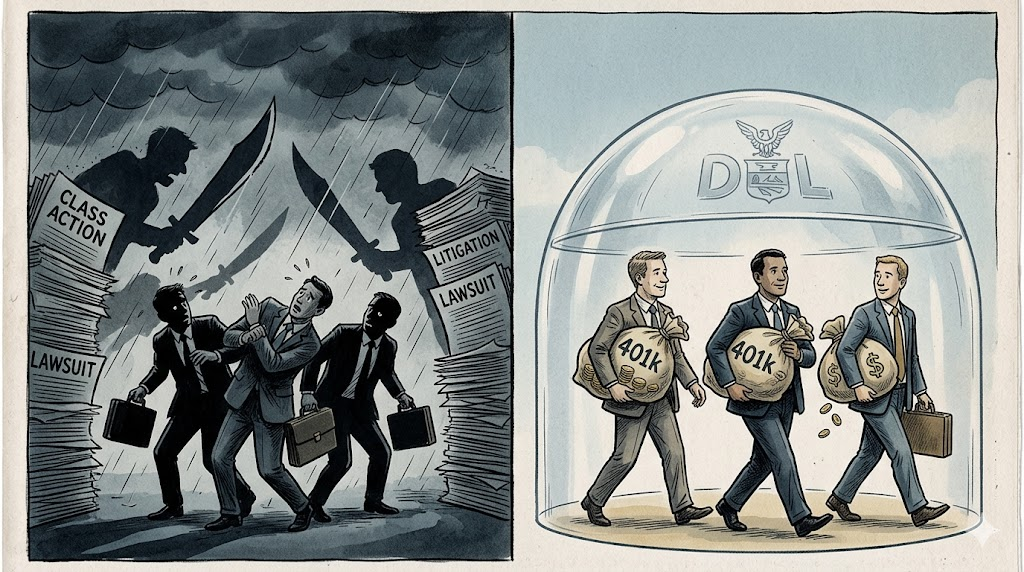
- The Open Door (Last August): The path for U.S. 401(k) retirement funds to enter the private equity and credit markets was technically opened last August via Trump’s Executive Order: “Democratizing Access to Alternative Assets for 401(k) Investors.”
- The Bottleneck: Despite the open door, fund managers were paralyzed by the fear of “lawyers with swords”—potential lawsuits. They hesitated, thinking, “Why should I risk a multi-billion dollar lawsuit if these assets underperform? It’s not worth the liability.”
- The Shield (Safe Harbor Rule): The Department of Labor (DOL) recently announced a Safe Harbor Rule, handing managers a powerful legal shield. It essentially declares: “As long as you follow these prescribed procedures, you will be protected from litigation even if the investment outcome is poor.
Reference: 401(k) Investment Selection Under the DOL’s Proposed Six-Factor Prudence Rule
💡 Removing Downside Risk, Building an Upside Launchpad
While war news obscures it, this Shield is a game-changer for market resilience. This development is perfectly timed with the Treasury’s upcoming liquidity schedule.

1️⃣ The External Engine: Treasury Liquidity & Policy Support
Once we pass the April 15th Tax Day hurdle, the Treasury’s Quarterly Refunding Announcement (QRA) will kick into high gear. This triggers the “Treasury Put,” where locked-up capital flows back into the market to quench the liquidity drought.
2️⃣ A Robust Safety Net for Private Credit
The core risk of private credit is a credit crunch caused by drying liquidity. Now, a secure channel has been established for the world’s largest pool of capital—the $13.8 trillion 401(k) market—to flow into private credit. This significantly lowers the probability of a 2008-style systemic collapse.
3️⃣ The Liquidity Trigger: IRS Account Activation
The activation of new IRS account protocols (including Trump-related accounts) starting mid-May is a vital signal. Individuals who were hoarding cash for tax payments will begin deploying funds back into the market following policy guidelines.
4️⃣ Psychological Reversal: A Lighter Market Post-War
The biggest internal threat (Private Credit risk) has been neutralized. With the external engine (Treasury) and individual capital (IRS) ready to move, the market is poised for a rebound. Once the geopolitical noise of war subsides, the market will find itself on a much lighter, firmer foundation.
🚀 Turn Off the Noise, Watch the Signal
The internal fuse of a private credit crisis has been dismantled. All that remains is the inflow of Treasury and private liquidity. The market is ready for a momentum shift.
Key Summary:
- Systemic liquidity safety nets are more important than geopolitical risks.
- The Safe Harbor Rule accelerates 401(k) capital flow into private credit.
- Treasury liquidity (QRA) and IRS account activations will act as the primary upside triggers.
The mountain of private credit risk is behind us. Wars eventually pause, but the structural flow of 18 quadrillion KRW into the system is just beginning. Instead of fearing current volatility, use this time to verify your Plan B and prepare for the momentum hidden behind the headlines.
Is your investment flow secure? May this perspective serve as a sturdy guide for your assets.