
“A 50-Year Promise, and the Cold Truth Behind It”
To stock investors, the title “Dividend King” is like the Holy Grail. The fact that a company has increased its dividends every single year for over 50 years seems like ironclad proof that it has survived every economic crisis and prioritizes its shareholders above all else.
But we must ask: “Are they paying dividends because they are making money, or are they borrowing money just to keep the ‘record’ alive?”
The Fallen Icon of Dividend Growth: The Tragedy of Boeing (BA)
Those who have practiced dividend growth investing will remember: just a few years ago, Boeing (BA) was an indispensable staple in any dividend portfolio. With a storied history of paying dividends since 1942 and an aggressive growth rate that saw its annual dividend jump from $1.94 in 2013 to $8.22 in 2019—a fourfold increase in just six years—Boeing appeared invincible.
However, when the crisis of the 737 MAX crashes hit, the myth we believed in shattered. The most shocking fact is that in 2019, when Boeing’s Free Cash Flow (FCF) recorded a deficit of approximately $4.3 billion due to the production halt, it still paid out $4.6 billion in dividends that year.

With no money coming in, Boeing had to make a choice. Consequently, its total debt, which was about $12 billion in 2018, skyrocketed nearly fivefold to $63 billion by 2020 in just two years. To protect its record and credibility, Boeing fell into the classic vicious cycle of borrowing debt to pay dividends.
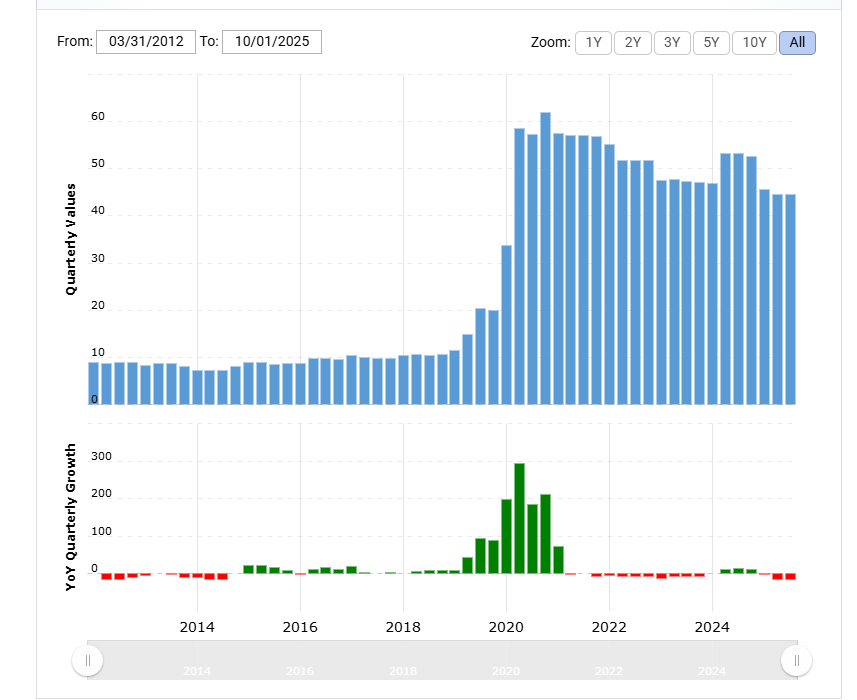
The outcome is something we all know. In March 2020, combined with the shock of COVID-19, Boeing eventually saw the tower of dividend growth it had built over decades collapse in an instant, declaring a total suspension of dividend payments. As of 2026, those dividends have yet to return.

Why the ‘3D-DGI’ Strategy is Necessary
As investors, the new standard we must face is 3D-DGI (3D-Dividend Growth Investing). This is a three-dimensional dividend growth strategy that goes beyond being trapped in one-dimensional data like past dividend history. It is a framework for selecting genuine dividend growth stocks by analyzing three pillars: cash flow, capital allocation, and technological innovation.
The Boeing case provides a vital lesson. Investing solely in “consistency”—how much they paid in the past—is like driving while only looking at the rearview mirror. What we really need to look at is multidimensional data like the following:
- 1D: FCF Quality – Is actual cash, not accounting profit, sustaining the dividends without relying on debt?
- 2D: Share Count Leverage – Has the company reduced the number of shares enough through years of buybacks? When the share count decreases, a “leverage effect” occurs where the dividend per share rises much faster even if the company spends the same amount of cash.
- 3D: AI-Driven Efficiency – Are AI and technological adoption reducing CAPEX, creating room to return excess cash to shareholders?
Beyond merely listing dividend stocks, planB aims to dive deep into the essence of dividend growth investing through these three pillars.
The crown of a Dividend King is merely heavy. For a company without the muscle (cash flow) to withstand that weight, the crown eventually becomes a shackle that chokes the shareholder. In the next post, we will examine the first pillar of 3D-DGI: “How to Analyze Cash Flow Without Being Fooled by Accounting Profits.”
I root for your dividend growth to become a reality, not just a number.
All content on this blog reflects my personal investment journey and is not financial advice. Investment decisions and their outcomes are solely your responsibility.